
Environmental impacts
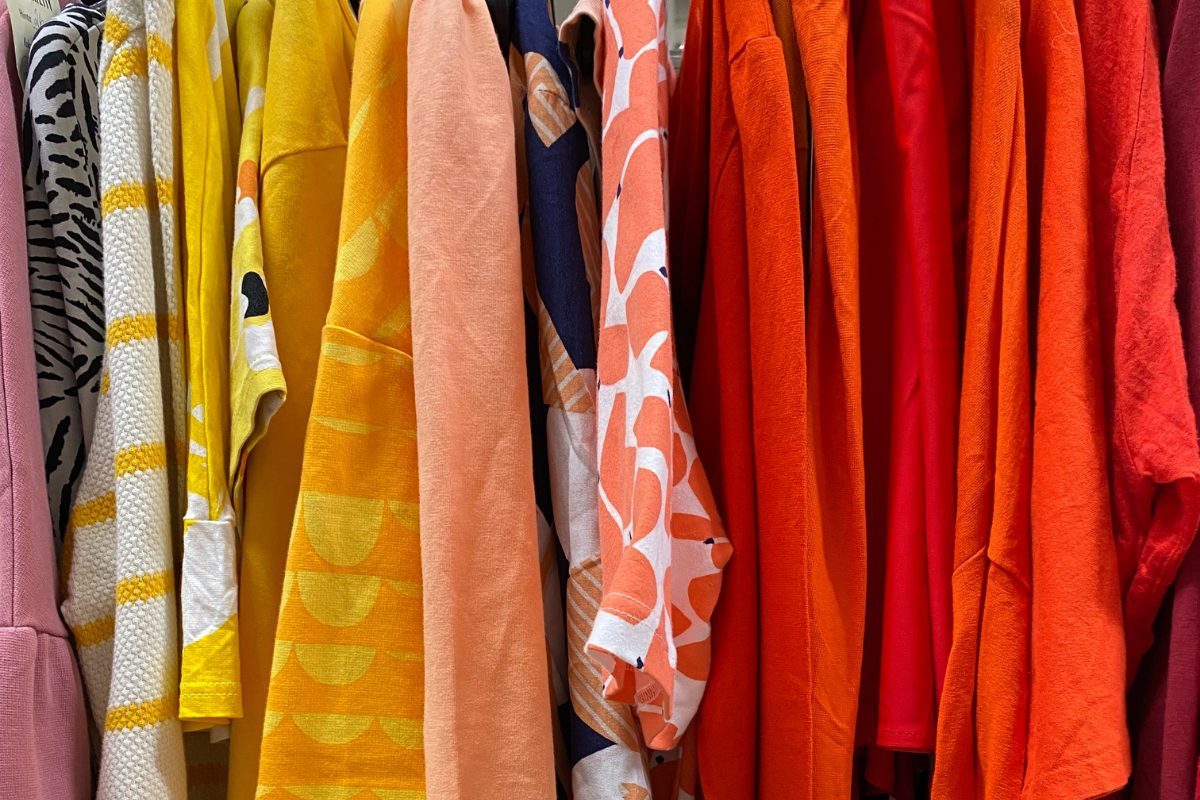
UFF keeps wearable clothes in circulation
UFF aims to keep wearable clothes in use for their original purpose for as long as possible. Donated clothes are carefully sorted and directed primarily towards reuse.
UFF manages the environmental impacts of its operations through an environmental management system that complies with the ISO 14001 standard. Its operations aim to use resources efficiently and pursue long-term solutions that support the circular economy and sustainable development.
The climate impact of a second-hand garment is a fraction of that of a new one
UFF monitors the climate impact of its operations by calculating its carbon footprint annually. According to the 2025 calculation, the climate impact of a second-hand garment bought from UFF is around three per cent of that of an equivalent new garment. The comparison takes into account that second-hand and new clothes generate approximately the same emissions during use and disposal. The calculation therefore focuses on the emissions avoided when a new garment does not need to be made.
UFF’s carbon footprint in 2025 was made up as follows:
- 44% purchased services and goods
- 29% logistics
- 16% purchased energy
- 7% business travel
- 4% waste management
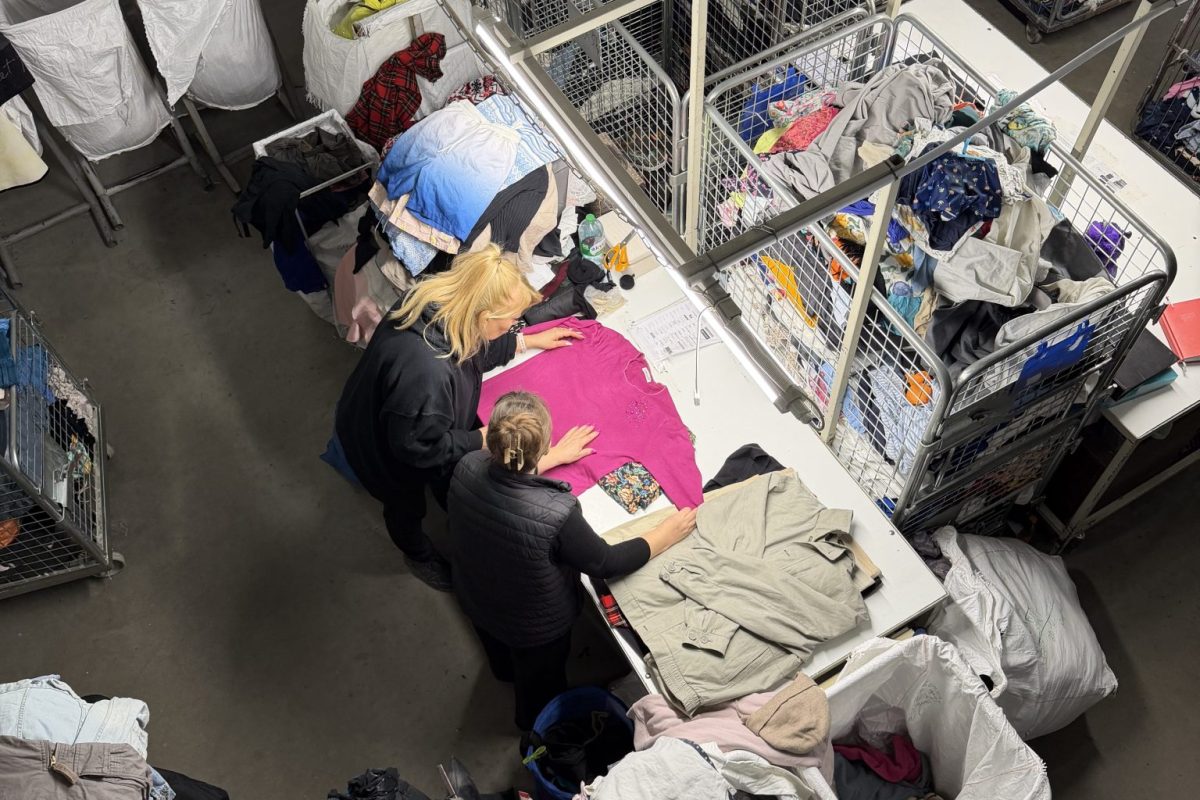
More than 75,000 tonnes of emissions avoided each year
UFF helped its customers reduce greenhouse gas emissions by more than 75,000 tonnes of CO₂ equivalent in 2025. This positive environmental impact is known as a carbon handprint. The carbon handprint describes the climate benefit generated when buying a second-hand garment replaces buying a new one. The benefit comes from extending the lifespan of textiles and thereby reducing the need to make new clothes.
The carbon handprint calculation follows the international GHG Protocol and covers all emission scopes (Scopes 1, 2 and 3). The Scope 3 calculation includes categories 1–7, 9, 11 and 12. The estimate takes into account that some customers would buy a second-hand garment in any case. The carbon handprint has been assessed in accordance with the Carbon Handprint Guide published by VTT and LUT University.
How clothes are used also affects the environment
A garment’s environmental impact does not end when it is bought. How it is worn, washed and cared for significantly affects its environmental impact over its entire lifespan.
You can extend the lifespan of clothes and reduce their environmental impact by:
- washing clothes at the lowest possible temperatures
- air-drying clothes instead of using a tumble dryer
- washing clothes less often whenever possible
- spot-cleaning stains instead of washing the entire garment
- airing clothes regularly
Taking good care of a garment extends its lifespan and reduces its environmental impact.

Research shows that reusing clothes benefits the environment
The environmental benefits of reusing clothes have been widely studied.
Research shows that wearing a second-hand garment has only a fraction of the environmental impact of a new one, as most emissions over a textile’s lifecycle arise during production. Extending the lifespan of clothes is therefore a key way to reduce the climate impact of textiles.
Explore the research reports and studies below on the reuse of second-hand clothes, the circular economy and the environmental impact of textiles.
Research reports
The environmental impact of reusing a second-hand garment is a fraction of the impact of making a new one.
The environmental impact of reusing a second-hand garment is a fraction of the impact of making a new one. Reuse reduces environmental impacts significantly more than any other way of handling used clothes.
LCA-based assessment of the management of European used textiles
Published by EuRIC – European Recycling Industries’ Confederation, 2023. Authors: Steffen Trzepacz (Norion), Dina Bekkevold Lingås (Norion), Lise Asscherickx (VITO), Karolien Peeters (VITO), Hilde van Duijn (EigenDraads), Marieke Akerboom (EigenDraads).
Reusing textiles is clearly a better option than recycling or incineration
Reusing textiles is clearly a better option than recycling or incineration. The impact changes very little whether clothes are reused within Europe or beyond it: transport accounts for only a small share of the carbon footprint. This confirms that returning textiles to use makes environmental sense globally, too.
Sustainability assessment of textile reuse and recycling in and outside of Europe
Published by the Swedish Environmental Research Institute IVL, 2025. Authors: Maja Nellström, Matilda Lidfeldt, Amanda Martvall, Gustav Sandin (Albertsson).
Careful sorting turns a second-hand garment from waste into a valuable consumer product
Careful sorting turns a second-hand garment from waste into a valuable consumer product. The international second-hand clothing trade supports the circular economy by extending the lifespan of clothes and preventing them from being incinerated in Europe.
From Collection of Used Clothes in Sweden to Reuse in Kenya.
Published by the Swedish Environmental Research Institute IVL, 2025.
In addition to its environmental benefits, textile reuse has significant economic and social impacts, creating jobs and livelihoods worldwide
In addition to its environmental benefits, textile reuse has significant economic and social impacts, creating jobs and livelihoods worldwide.
The Socio-Economic Impact of Second-Hand Clothes in Africa and the EU27+
Published by Oxford Economics, 2024; commissioned by Humana People to People and Sympany+.
The second-hand clothing trade is a significant source of employment and livelihoods in Africa
The second-hand clothing trade is a significant source of employment and livelihoods in Africa.
Published by Humana People to People, 2024. Authors: Dr Joseph Feyertag, Professor Patrick Diamond, Queen Mary University of London.