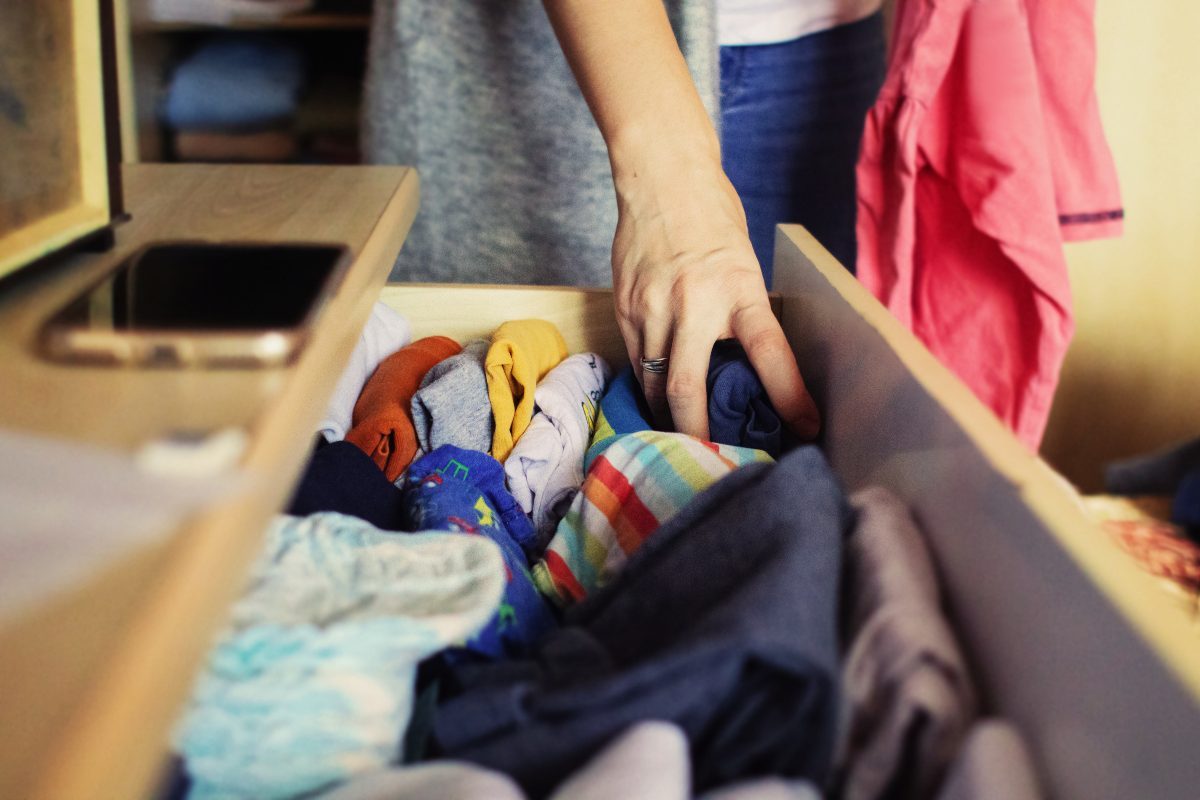
The sorting assistant makes sorting clothes easier
Clothes you no longer need could be someone else’s treasure. It is important to collect all reusable clothing and home textiles, as reuse is always the best option for the environment. The sorting assistant helps you sort clothes so they can be recycled as efficiently and smoothly as possible.
Help with sorting clothes
The sorting assistant helps you sort clothes correctly and tells you whether an item should be donated, taken to a textile recycling collection point or put in general waste.
New, unworn clothes are always suitable for donation. For used clothes, the sorting assistant helps you assess their condition and the most suitable way to handle them.
What clothes are suitable for donation?
Clean, undamaged clothes, footwear, accessories and home textiles are all suitable for donation. Minor defects are also fine if they can be repaired.
Professional sorters make the final assessment of whether an item can be reused and direct it to the appropriate next use.
What clothes should go in general waste?
If an item is wet, oily, mouldy or otherwise contaminated, it cannot be recycled. Putting it in general waste prevents it from contaminating recyclable materials and directs it to energy recovery. Broken shoes and accessories, as well as used underwear and socks, also belong in general waste.
What clothes should go to textile recycling?
Clean but worn, damaged or worn-out clothes and home textiles should go to textile recycling. These include:
- damaged shirts, trousers, skirts and coats
- torn or worn sheets, curtains and tablecloths
Textiles taken for recycling must always be clean and dry.
Wet, mouldy, oily or otherwise contaminated textiles do not belong in textile recycling collections; they should go in general waste. For hygiene reasons, used socks, underpants and bras are not suitable for recycling and should be put in general waste.
You can find your nearest textile recycling collection point at www.kierratys.info.
Why is sorting clothes important?
Reusing clothes for their original purpose is the best option for the environment. It reduces the need to make new clothes and saves natural resources, water and energy.
Sorting clothes correctly helps keep as many of them in use as possible. Reusable clothes can be sold, worn textiles can be recycled into new materials, and unusable textiles can be disposed of appropriately.
Sorting matters even before clothes leave your home. Wet, mouldy, oily or otherwise contaminated textiles can spoil other clothes in a collection and make otherwise reusable textiles unusable. That is why it is important to put these textiles straight into general waste.
The better clothes are sorted at home, the more likely they are to reach the right destination. Sorting correctly helps extend the life of clothes and ensures that valuable materials remain in circulation for as long as possible.