
Clothing recycling and reuse
When you donate clothes to UFF, you give them the chance to find a new owner. We keep wearable clothes in use for as long as possible, as reuse is the best option for the environment.
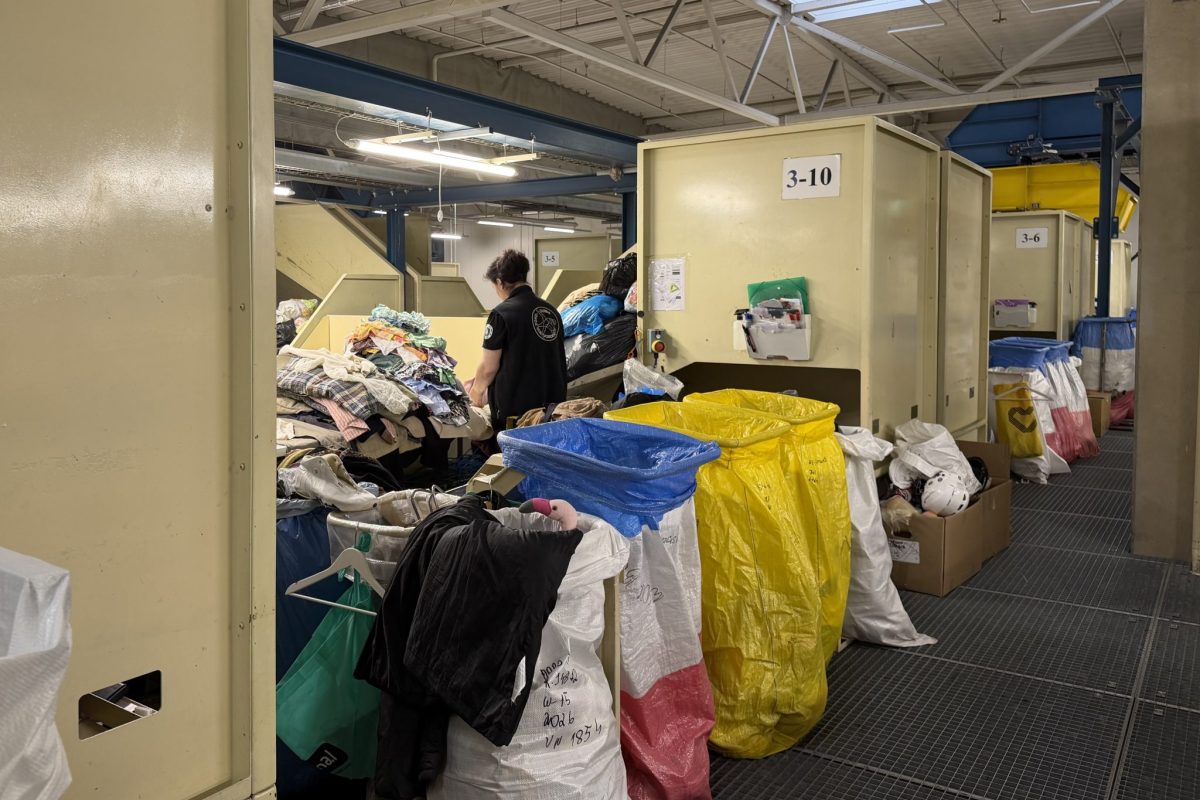
Careful sorting is an important part of the clothing cycle. It ensures that as many donated clothes and textiles as possible can be put back to use, and that valuable materials can be used as efficiently as possible.

Why are clothing recycling and reuse important?
In a circular economy, products and materials remain in use for as long as possible instead of becoming waste. Clothing collection, reuse and material recycling are practical examples of the circular economy in action.
Clothes in good condition that you no longer need deserve a second chance. When a garment finds a new owner, its lifespan is extended and the need to manufacture new clothes is reduced. This saves natural resources, reduces waste and lowers the environmental impact of textiles. If a garment is no longer wearable, its materials can be used as raw materials for new products.
The second-hand clothing trade is an essential part of responsible fashion consumption. A significant share of the environmental burden of textiles is generated during clothing production. When existing clothes stay in use for longer, the need for new products decreases, as does the use of resources required to manufacture textiles.
In a well-functioning circular economy, new clothes are durable, long-lasting, reusable and recyclable. Clothing care is also important. Washing, repairing and caring for clothes correctly helps extend their lifespan.
What happens to clothes after they are collected?
Clothes donated for collection are carefully sorted so that each textile can be put to the best possible use. Wearable clothes are sold in UFF shops or through wholesale channels. Worn textiles are recycled as raw material, and only items unsuitable for recycling are sent for incineration with energy recovery.
One of the most effective ways to reduce a garment’s environmental impact is to extend its lifespan as much as possible.
Environmental impacts of clothing recycling
Extending the lifespan of clothes is one of the most effective ways to reduce the environmental burden of textiles, as most of their environmental impact is generated during manufacturing.
Our aim is to keep wearable clothes in use for as long as possible for their original purpose. That is why donated clothes are carefully sorted and prioritised for reuse. People in Finland can reduce their own carbon footprint by donating clothes for reuse and choosing second-hand clothes.